

Premium Residential Insulation


Silence the Brutal Heat| 5 Premium Insulation Services in UAE Buildings Truly Deserve
In a country where the sun can push outdoor temperatures past 50°C and air conditioning runs twelve months a year, the insulation inside your walls, roof, and floors is not a building detail it is the difference between a property that bleeds energy and money, and one that performs efficiently, comfortably, and sustainably. Alam Almadina LLC delivers certified insulation services in UAE across the full spectrum of thermal and acoustic applications for residential villas, commercial towers, industrial warehouses, and everything in between. If your building is too hot, too loud, too expensive to cool, or failing its energy performance requirements, the answer almost always begins here.
Why Insulation Is the Most Overlooked Investment in UAE Buildings
Most property owners think about insulation services only when something goes wrong a sky-high DEWA bill, a room that never cools down no matter how hard the AC runs, condensation appearing on walls, or an HVAC system that breaks down year after year despite regular servicing. What they do not realize is that all of these problems share the same root cause: a building envelope that is letting heat win. The UAE’s climate is one of the most thermally demanding on earth. Intense solar radiation, high ambient temperatures, and significant day-to-night temperature swings put building envelopes under constant stress and without proper insulation services in UAE, that stress translates directly into energy cost, equipment wear, and occupant discomfort
The financial case for insulation is straightforward and well-documented. Buildings with correct thermal insulation can reduce cooling energy consumption by 30 to 50 percent compared to uninsulated equivalents. For a commercial building spending AED 50,000 a month on electricity, that is a potential saving of AED 15,000 to AED 25,000 every single month a return on investment measured in months, not years. The Abu Dhabi Estidama programme mandates minimum insulation performance levels for new construction precisely because the data on energy savings is unambiguous. Alam Almadina’s insulation services in UAE are specified and installed to meet and exceed these performance benchmarks across every property type.
Our 5 Insulation Systems
No single insulation material is the right answer for every building, every surface, or every performance requirement. Alam Almadina carries and installs five proven insulation systems, each selected for a specific set of conditions. Here is what each one does, where it performs best, and why it matters for UAE buildings specifically
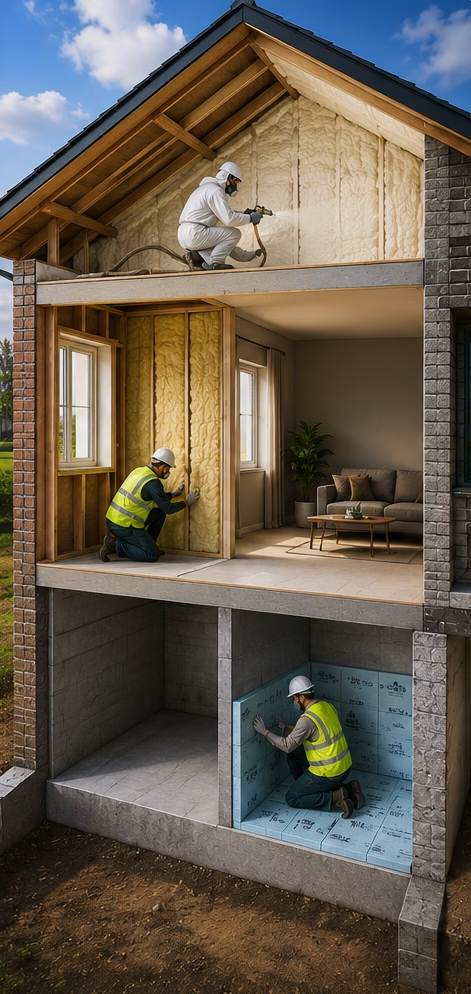
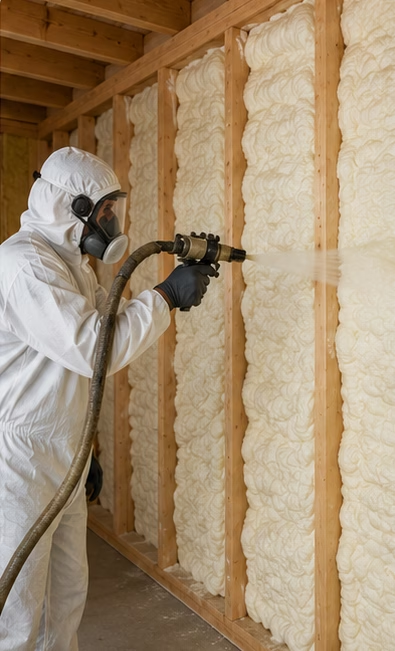
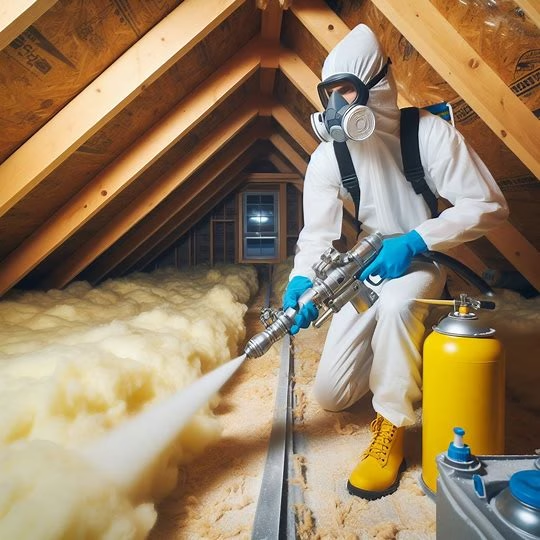
Spray Foam Insulation. Spray polyurethane foam is the most versatile insulation system available for UAE buildings. Applied as a liquid that expands on contact to form a rigid, seamless layer, spray foam fills every gap, crack, joint, and irregular surface that sheet-based products cannot reach. This seamless application is critical in the UAE context, because any gap in an insulation layer however small becomes a thermal bridge that undermines the performance of the entire system. Spray foam’s high R-value per inch, combined with its air-sealing properties, makes it the preferred choice for rooftops, mechanical rooms, exposed pipe runs, and any surface where conventional insulation boards cannot conform. As part of our insulation services in UAE, spray foam is one of the most frequently requested systems by clients who have previously experienced under-performing insulation from other contractors.
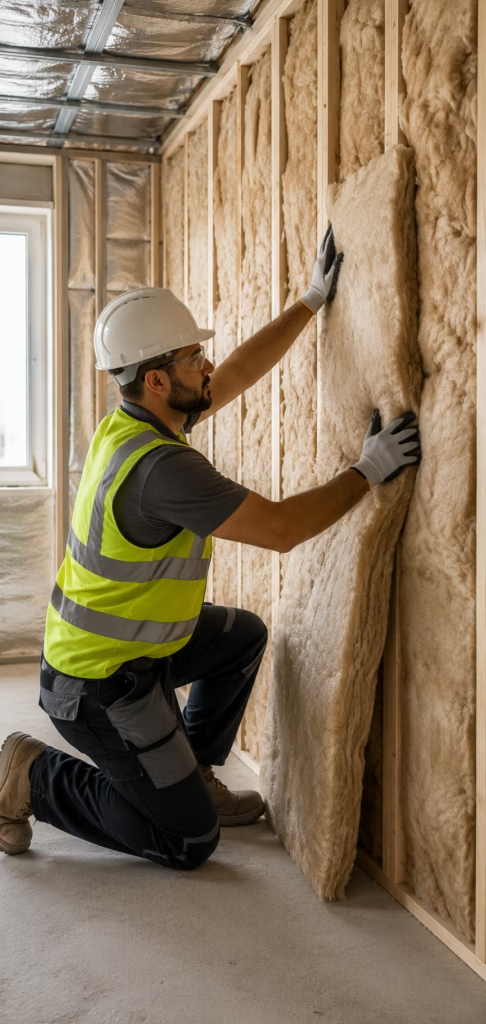
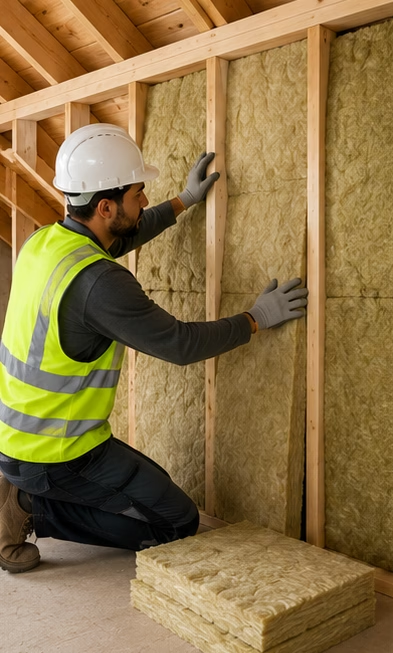
Fiberglass Batt Insulation. Fiberglass remains one of the most widely used insulation materials in the world for good reason it is thermally effective, lightweight, non-combustible, and cost-efficient to install in standard cavities. In the UAE building context, fiberglass batts are the workhorse of residential wall and ceiling insulation: installed into wall cavities and ceiling voids during construction or retrofit, they deliver reliable thermal resistance at a price point that makes the return on investment compelling for homeowners and apartment developers alike. Alam Almadina’s installation teams are trained in the correct compression and installation protocols for fiberglass because a compressed or incorrectly fitted batt loses a significant portion of its rated R-value, a detail that many contractors overlook.
Mineral Wool Insulation. Where fire performance is a requirement and in commercial, high-rise, and industrial buildings across the UAE, it almost always is mineral wool is the material of choice. Its fire resistance rating, combined with excellent acoustic absorption properties, makes it the standard specification for commercial tower cores, partition systems, ceiling plenums, and industrial structures where passive fire protection is mandated. The ASTM fire protection standards that inform UAE building regulations set specific performance benchmarks for insulation materials used in fire-rated assemblies and mineral wool meets or exceeds these across the relevant classifications. As part of Alam Almadina’s commercial insulation services in UAE, mineral wool is specified wherever the project’s fire engineering or acoustic design requires it.
Rigid Foam Board Insulation. For applications where thermal performance per unit thickness is the primary requirement flat roofs, external façade insulation systems, podium decks, and below-grade walls rigid foam board delivers the highest R-value per inch of any solid insulation product. In the UAE, where flat roof construction is the norm and solar gain through roof surfaces accounts for a disproportionate share of a building’s total cooling load, rigid foam board installed correctly beneath the waterproofing membrane or as a protected membrane assembly is one of the most impactful single interventions available. Alam Almadina specifies and installs rigid foam board as part of integrated roof build-ups that combine waterproofing and insulation in a single coordinated system — giving clients the benefit of both disciplines from one contractor.
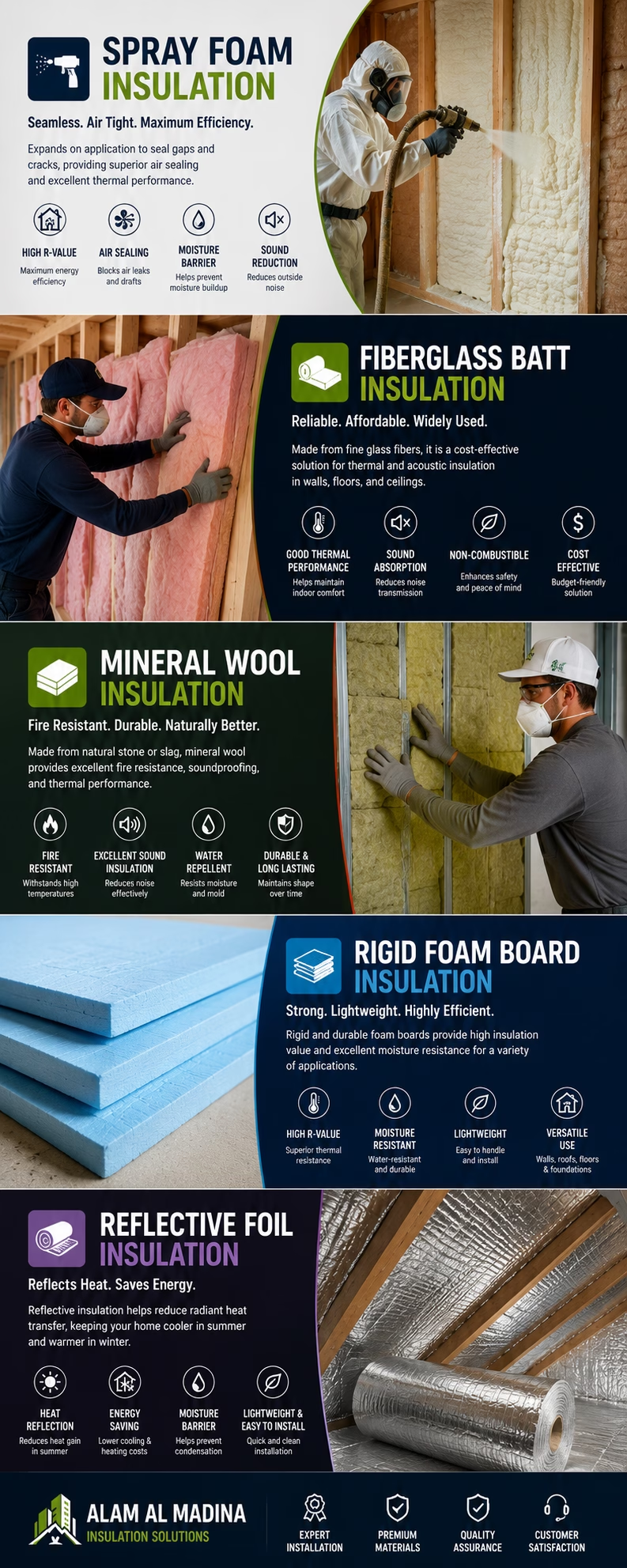
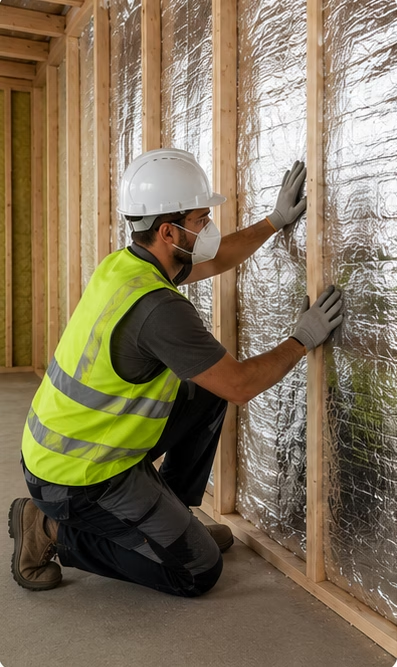
Reflective Foil Insulation. Reflective insulation works on a fundamentally different principle from the other systems in our range. Rather than slowing heat conduction through a material, it reflects radiant heat back towards its source which in the UAE means reflecting solar energy away from the building’s interior before it ever becomes a conduction problem. This makes reflective foil insulation particularly effective in metal roof structures, warehouse buildings, and any application where the dominant heat pathway is radiant rather than conductive. For industrial and logistics clients across Dubai, Sharjah, and the other Emirates, reflective foil installed within their warehouse roof structures delivers a measurable reduction in internal temperature that directly impacts both worker comfort and the load on their cooling systems.
Thermal vs Acoustic Insulation Understanding the Difference
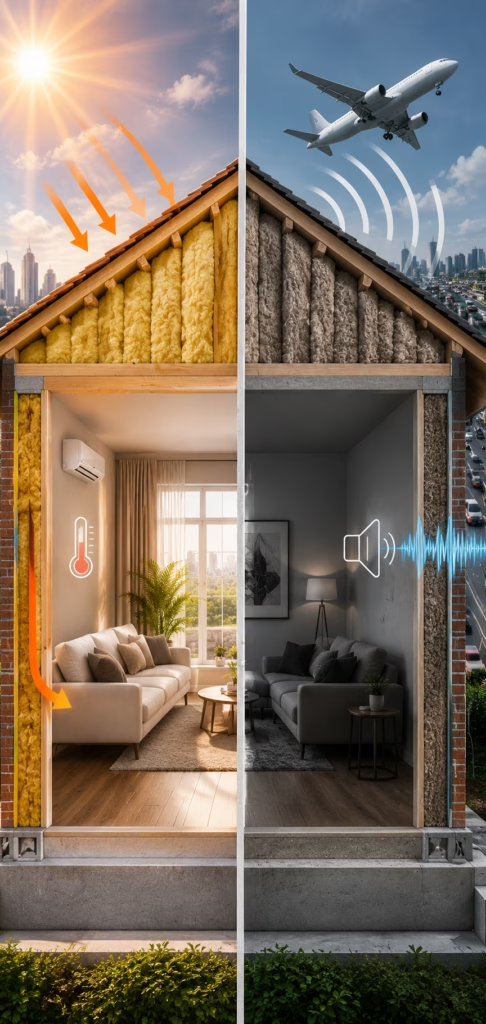
When clients enquire about insulation services in UAE, they often focus entirely on thermal performance and understandably so, given the climate. But acoustic insulation is an equally important consideration in many building types, and the two requirements do not always point to the same material choice. Understanding both helps you make the right specification decision for your specific building.
Thermal insulation is designed to slow the transfer of heat through a building element a roof, a wall, a floor by providing resistance to conductive, convective, and radiant heat flow. The higher the R-value of the material (or the U-value of the assembly), the better it performs thermally. In UAE buildings, thermal insulation is most critical at rooftop and façade level, where solar exposure is highest.
Acoustic insulation is designed to reduce the transmission of airborne sound and impact noise through building elements between apartments, between floors, between offices and common areas, and between buildings and external noise sources such as roads, plant rooms, and mechanical equipment. The relevant performance measure here is sound reduction index (SRI) or sound transmission class (STC). Materials that perform well thermally do not always perform well acoustically, and vice versa which is why a proper specification starts with understanding which requirement dominates, and which materials address both where possible. Mineral wool is the most versatile dual-purpose material in this regard, performing well on both thermal and acoustic metrics.
New Construction vs Retrofit Insulation
Alam Almadina delivers insulation services in UAE for both new construction projects and existing buildings requiring retrofit or upgrade. The two contexts have fundamentally different constraints, and our approach adapts accordingly.
On new construction, insulation services is specified as part of the overall building envelope design coordinated with the structural system, the waterproofing specification, the mechanical services, and the facade system. At this stage, the full range of insulation options is available, and the most thermally and acoustically optimal system can be selected and sized without the limitations imposed by existing structure or finishes. Alam Almadina works alongside architects, MEP engineers, and main contractors at this stage to ensure the insulation specification is integrated into the build programme efficiently and to the required performance standard.
On retrofit and upgrade projects, the challenge is different. The building already exists, finishes may be in place, access may be constrained, and occupants may be present during the works. Our retrofit insulation services in UAE are designed to deliver maximum thermal improvement within these constraints using systems like spray foam that can be applied to accessible surfaces without full strip-out, or rigid board systems that can be installed as an over-roofing layer without disturbing existing structure. Retrofit insulation consistently delivers a faster payback on investment than any other building upgrade, because the energy savings begin immediately and the disruption to the building’s operation is minimal when the work is properly planned
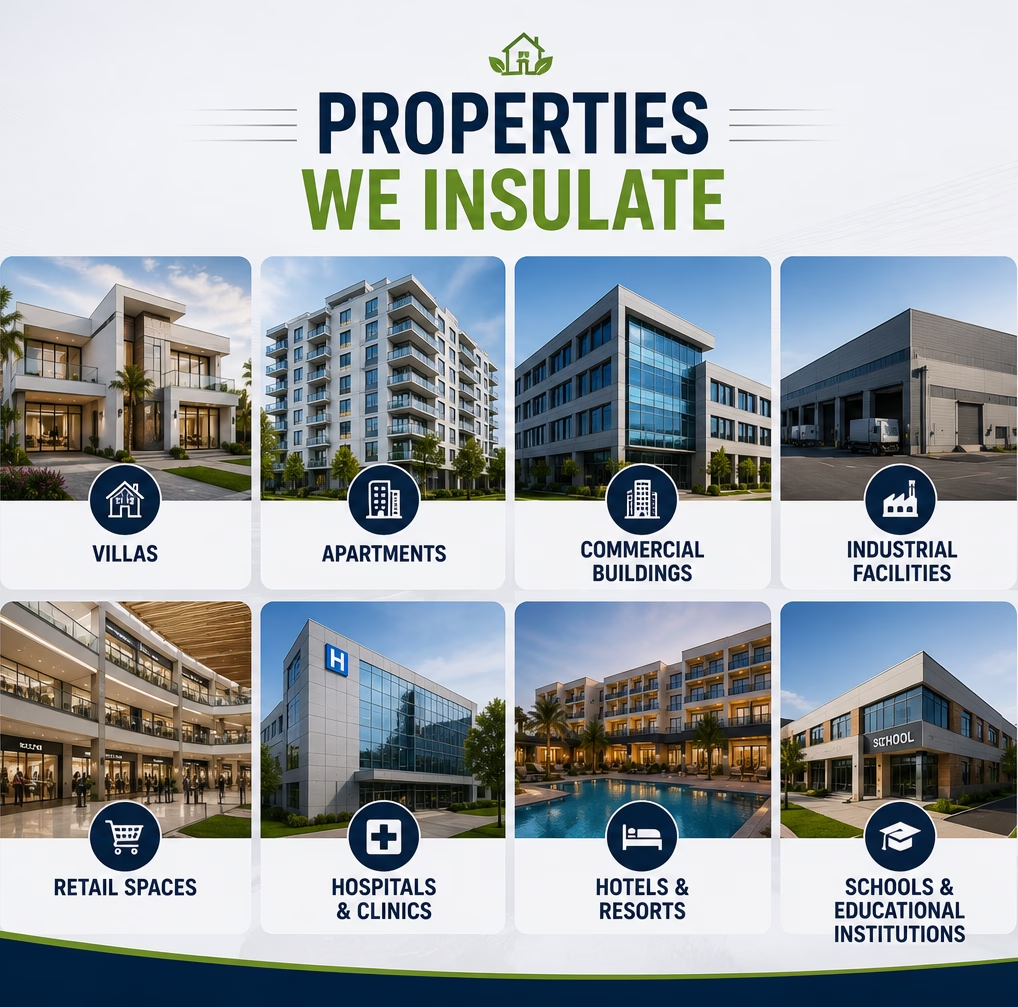
Properties We Insulate
Our insulation services in UAE cover every property category in the market. On the residential side, we insulate villas, townhouses, apartment buildings, and community facilities helping homeowners reduce cooling bills and improve comfort, and helping developers meet energy performance requirements on their projects. On the commercial side, we work on office towers, retail centres, hotels, hospitals, schools, and data centres where thermal management, acoustic separation, and energy efficiency are all critical operational requirements. On the industrial side, warehouse and logistics operators across the UAE’s free zones and industrial districts benefit from our reflective foil and spray foam systems, which deliver meaningful reductions in internal temperature without the need for significant additional mechanical cooling.
The Alam Almadina Insulation Services Process
The quality of any insulation installation depends entirely on the rigour of the process behind it not just the product specified. Every Alam Almadina insulation project follows a structured four-stage process designed to ensure that the system we install performs as specified, for as long as it is designed to last.
The process begins with a thermal assessment. Before any product is recommended, our team evaluates the building’s current performance identifying where heat is entering or escaping, what the existing insulation layer (if any) consists of and where it is failing, and what the energy performance target for the project is. This assessment is what allows us to specify a system that addresses the actual thermal problem rather than applying a generic product and hoping for the best.
Surface preparation follows. The substrate onto which insulation is applied must be clean, dry, structurally sound, and free from contamination. A spray foam system applied to a damp or contaminated surface will fail to bond correctly. A rigid board installed over a deteriorated membrane will not contribute to the building’s thermal performance in the way the specification intends. Our teams prepare every surface to the standard required by the specific system being installed.
Application is carried out by trained technicians using calibrated equipment. For spray foam, this means correct mixing ratios, correct temperature and humidity conditions, and correct application thickness verified by measurement, not estimate. For board systems, it means correct adhesive selection, correct joint treatment, and correct edge detailing to eliminate thermal bridges. For batt systems, it means correct placement, correct compression management, and correct facing installation where vapour control is required.
Finally, every installation is inspected before the area is closed up or handed over. Where thermal imaging is available, it is used to verify that the insulation layer is continuous, correctly installed, and free from voids or thermal bridges. Full documentation is provided at handover material data sheets, installation records, and performance certificates where applicable.
Insulation and UAE Sustainability Compliance
Sustainability compliance is an increasingly important driver of insulation specification in the UAE. Abu Dhabi’s Estidama Pearl Rating System sets mandatory minimum energy performance requirements for new buildings requirements that are directly tied to the thermal performance of the building envelope, including the insulation system. Dubai’s Green Building Regulations similarly mandate minimum U-values for roofs, walls, and glazing across all new construction. Alam Almadina’s insulation services in UAE are specified and documented to support compliance with both frameworks giving developers and contractors the technical data and installation records they need to achieve the required ratings.
Frequently Asked Questions
How much can insulation reduce my electricity bill in the UAE?
The reduction depends on the building type, the existing insulation condition, and the system installed. In residential properties with no existing insulation, a correctly specified and installed thermal insulation system can reduce cooling energy consumption by 30 to 50 percent. In commercial buildings, the savings depend on the envelope area and current performance baseline but returns of 25 to 40 percent are consistently achievable with a properly specified system.
Which insulation system is best for a UAE villa rooftop?
For a flat concrete rooftop the most common configuration in UAE villas a rigid foam board system installed as part of an inverted or protected membrane assembly delivers the best thermal performance per unit thickness. Where the roof has an irregular surface or existing penetrations that are difficult to seal, spray foam is the preferred alternative. Our team will assess the specific roof condition and recommend the most appropriate system during the site visit.
Can insulation be added to an existing building without major disruption?
Yes. Retrofit insulation services in UAE are one of our most requested service types. Spray foam can be applied to accessible roof and wall surfaces without strip-out. Rigid board over-roofing systems add insulation above the existing roof structure without disturbing internal finishes. In most cases, retrofit insulation work can be completed with minimal disruption to building occupants and operations.
Do your insulation systems carry fire ratings?
Yes. Our mineral wool and fiberglass systems carry fire resistance ratings appropriate for use in fire-rated building assemblies. Spray foam and rigid board products are available in fire-retardant formulations where required by the project specification. All materials are supplied with full technical data sheets documenting fire performance classifications.
Do you provide insulation services for both thermal and acoustic requirements?
Yes. Alam Almadina’s insulation services in UAE cover both thermal and acoustic applications. Where a project requires performance against both criteria common in residential apartment buildings and commercial offices we specify systems that address both, with mineral wool being the most versatile dual-performance material in our range.